
WRO Junior-High 2015. Collecting single treasure. Full run. Part 5
In this episode we do a full run of the mission for collecting a single treasure before going into explanation on how we have programmed the robot.
- #228
- 16 Oct 2016
In this episode we do a full run of the mission for collecting a single treasure before going into explanation on how we have programmed the robot.

It's a box! It's a robot! It's a box robot. Box robots are very popular on different robotics competitions involving LEGO Mindstorms like the FIRST LEGO League or World Robotics Olympiad. Let's start with a brief introduction and continue in the next videos with explanation on the features of the robot and why such robots are frequently used.
We are working on the World Robotics Olympiad (WRO) 2013 competition and its elementary part. The series will introduce three different concepts and this would be Arrays, Menus and Counting different lines. In the video you will see the robot working as it is in the final stage.

In this series we will do a short demonstration on the FIRST LEGO League Trash Trek 2015 solutions by one of the teams. These are example solutions with good tips and tricks along with some interesting strategies and videos directly from the team
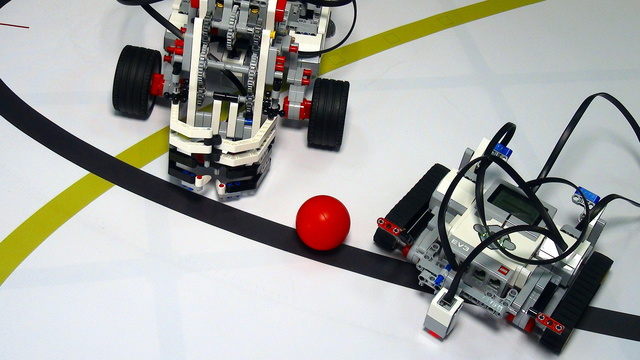
Starting with the World Robotics Olympiad 2014 Junior-High challenge we first catch the object on our path. We discuss a good mechanism for catching and lifting balls that can do two movements with one motor.

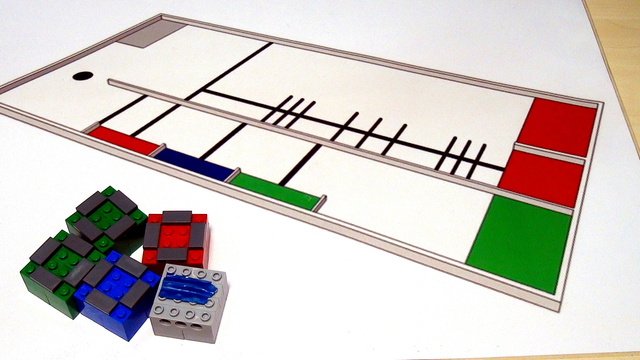
Moving in a grid of objects. That's the large challenge of the World Robotics Olympiad 2015 Junior-High 2015. In this video we would build a robot that can collect the boxes (treasures). The robot would also be able to move around the treasures.

Let's look at what game of life actually is, what are the rules and how to play the game on paper

Motors can be placed in opposite directions... opposite .. directions. Robo-builders might have difficulties imagining it so we have build one. One of the motors facing forward, the other backward. It is interesting how this robot turns.

Robotics Game of Life – that’s the name of our new scientific journey. We are organizing a 14-sessions course (1 session weekly). The idea of the course is to develop a solution to the Conway Game of Life where the robots would actually play the game. Students will construct the robots by instructions and lots of imagination. Initial programs will be provided by us and modified by students.

The second construction of the series along with a comparison with the first construction. The new robot requires more parts, but has a few more advantages.

Five different robot chassis. This is the goal of the series. To present ideas for different design of the robots and especially the robot bases. If the base is stable and balanced, then in could easily be extended. Let's start with the most simple of the five.
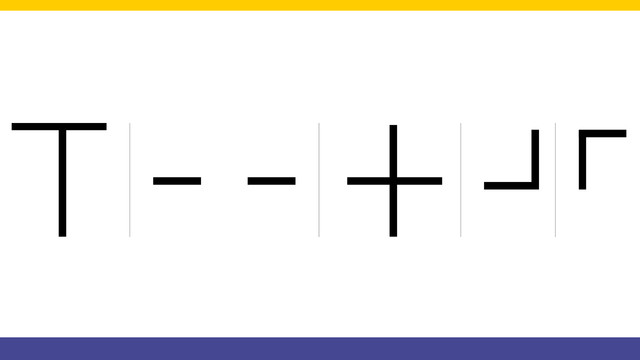
Looking at the field we must first think of a strategy of solving this line following problem. There are rules that the robot must follow and these rules should be programmed in the robot.
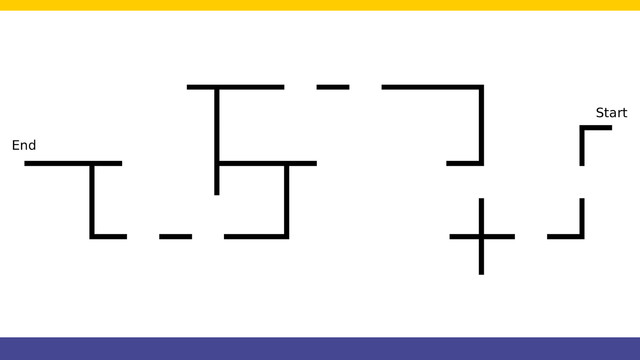
We start a course for following a line with crosses and gaps. This is a challenge that one of the users at FLLCasts.com was trying to accomplish and asked us for advice. We present the whole challenge to you step-by-step. But first, let's also see the whole run of the line following algorithm. With this course, we also do an introduction of using State Machine as a programming pattern.

Next robot construction for holding and releasing balls from this container. In this video we discuss the improvements and how to use the chains to release one ball at a time.

Improving the construction for the World Robotics Olympiad missions. The improvement is in the position of the sensor and the size of the balls container.

In this last part of the tutorial we actually lift the rocket modules and prepare them for lauch. First we have to collect them in the right order and them somehow lift them.

A robot that contains balls and releases them. It counts how many balls to release depending on the "treasures" it has hunted on the field. This is part of the World Robotics Olympiad 2015 Elementary challenge.

Sometimes you could just throw a ball from base and solve a competition. Or at least many teams think so. In this video we would explore a very simple attachment for throwing balls from base. Can you use this for other missions? - we think so. Check out the video.

Collect the humans and clear them from the rocket launching region. This is rather straightforward as a task, but it requires a little bit of thinking if you want to do it without manipulators.

Implementing the next logic for aligning to the border when we approach the border from the right.

We have previously aligned to lines with the Color Sensors. In this series we are doing the same program, but with Ultrasonic Sensors that are aligning the robot to a Wall.

Introducing three main concepts - Energy, Inertia Moment and Angular Velocity. We describe what is the moment of Inertia, how do we calculate it and how do we measure it?

In a competition environment like the FIRST LEGO League (FLL) or World Robotics Olympiad (WRO) the color sensor is more than useful. It makes positioning on the field quite easy and precise.

How can you accumulate some energy in an LEGO Mindstorms EV3 construction an use this energy at a later moment? How does a Flywheel work, why is it important and what is the purpose? What is energy, inertial moment and angular velocity. These are just some of the questions we would answer in this series on Physics and LEGO Mindstorms.

Counting lines and stopping on the third is the subject of this video. It is important to know how to do this in order to conduct more than one experiment in STEM classes (if we consider that each line is an experiment)

One attachment to rule them all...We have seen it and it works -> solving most of the competition models with only one attachment. In this video tutorial without programming we would walk you through the principles and methods of using a single attachment for most of the FIRST LEGO League competition models. One can learn alot from using as few parts as possible to solve as many missions as possible.
